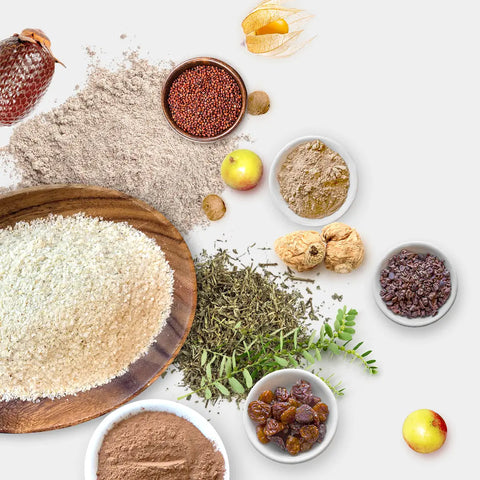
Cuando pensamos en nutrición, la mayoría de las personas se enfoca en macronutrientes como proteínas, carbohidratos y grasas, o en micronutrientes como vitaminas y minerales. Estos son esenciales, pero representan solo la base de cómo los alimentos nutren al cuerpo.
Los alimentos de origen vegetal también aportan una amplia variedad de compuestos naturales llamados fitonutrientes. Aunque no se consideran nutrientes esenciales, cada vez se reconoce más su papel en la calidad nutricional de los alimentos integrales y en el bienestar general cuando forman parte de una dieta variada y rica en plantas.
¿Qué son los fitonutrientes?
Los fitonutrientes, o fitoquímicos, son compuestos bioactivos producidos por las plantas que les ayudan a defenderse de factores de estrés ambiental como la radiación UV, plagas y enfermedades. También son responsables de muchos de los colores, sabores y aromas presentes en los alimentos de origen vegetal.
Los científicos han identificado más de 25,000 fitonutrientes en los alimentos de origen vegetal.1 Sin embargo, la investigación suele centrarse en un número más reducido de grupos bien caracterizados, junto con compuestos específicos ampliamente estudiados por su actividad biológica.
Principales clases de fitonutrientes
- Polifenoles como flavonoides, antocianidinas, catequinas y ácidos fenólicos
- Carotenoides como beta-caroteno, luteína y licopeno
- Glucosinolatos como glucorafanina y sinigrina
- Fitoestrógenos como isoflavonas y lignanos
- Alcaloides y compuestos organosulfurados como sulfuros y tioles
Entre estos, los polifenoles y los carotenoides son los más estudiados debido a su abundancia en los alimentos de origen vegetal y sus posibles propiedades.2
Posibles beneficios de los fitonutrientes
Aunque no son nutrientes esenciales, los fitonutrientes interactúan con múltiples sistemas del cuerpo y pueden contribuir a la salud a largo plazo cuando se consumen a través de alimentos integrales.
1. Actividad antioxidante
Muchos fitonutrientes pueden ayudar a neutralizar los radicales libres, moléculas inestables que pueden dañar las células con el tiempo. Esta actividad antioxidante apoya los sistemas de defensa del cuerpo frente al estrés oxidativo, asociado con el envejecimiento y diversas condiciones crónicas.³
2. Salud cardiovascular
Las dietas ricas en alimentos que contienen fitonutrientes, especialmente polifenoles, se han asociado con una mejor función vascular. Estos compuestos pueden ayudar a mantener la flexibilidad de los vasos sanguíneos y a una mejor circulación.4
3. Modulación de la inflamación
Ciertos fitonutrientes pueden influir en las vías inflamatorias del cuerpo al interactuar con moléculas involucradas en la respuesta inmune. Aunque la inflamación es un proceso normal, su regulación es clave para mantener el funcionamiento a largo plazo.5
4. Interacción con la microbiota intestinal
Algunos fitonutrientes, especialmente los polifenoles, son metabolizados por las bacterias intestinales y pueden influir en la composición del microbioma. Esta interacción puede favorecer la diversidad microbiana, cada vez más relacionada con la salud digestiva y general.6
5. Protección celular
Los fitonutrientes también pueden contribuir al funcionamiento celular al influir en enzimas de desintoxicación y en vías de señalización. Estos efectos ayudan al organismo a responder a factores de estrés a nivel celular.7
Principales fuentes de fitonutrientes
Enfocarse en la variedad dentro de los alimentos de origen vegetal es una de las formas más efectivas de aumentar naturalmente la ingesta de fitonutrientes. A continuación, se presentan algunas fuentes destacadas según cada grupo.
Polifenoles
- Frutos rojos (arándano azul, fresa, frambuesa)
- Té verde
- Cacao y chocolate oscuro
- Algarrobo
- Lúcuma
- Quinua, amaranto y cañihua
- Camu camu
- Especias como clavo y canela
Carotenoides
- Zanahoria
- Camote
- Calabaza
- Verduras de hoja verde (espinaca, kale)
- Tomates
- Mango
- Papaya
- Aguaje
Glucosinolatos
- Brócoli
- Coles de Bruselas
- Repollo
- Rúcula
- Maca (que también contiene compuestos únicos llamados macamidas)
Fitoestrógenos
- Semillas de lino
- Alimentos de soya como tofu y tempeh
- Semillas de sésamo
- Legumbres como garbanzos, lentejas y frijoles
- Aguaje
Alcaloides y compuestos organosulfurados
- Ajo
- Cebolla
- Puerro
Cómo incluir fitonutrientes en la dieta diaria
Incluir fitonutrientes en la dieta no se trata tanto de añadir nuevos alimentos, sino de cómo combinar los que ya consumes. Pequeños cambios en la variedad y composición pueden hacer que las comidas diarias sean más diversas desde el punto de vista nutricional.
- Piensa en combinaciones, no en ingredientes aislados. Las comidas que integran diferentes fuentes vegetales aportan naturalmente una mayor variedad de compuestos.
- Combina colores y texturas. Un bowl que incluye granos, frutas, frutos secos o semillas reúne distintos compuestos en un solo plato. También puedes probar nuevas formas de tus alimentos habituales, como la quinua en hojuelas o inflada.
- Usa pequeños añadidos de forma estratégica. Ingredientes como el cacao, el camu camu en polvo o las especias pueden aportar compuestos adicionales sin cambiar la estructura del plato.
- Prioriza la constancia sobre la complejidad. Incorporar variedad de forma regular suele ser más efectivo que preparar comidas muy elaboradas de forma ocasional.